

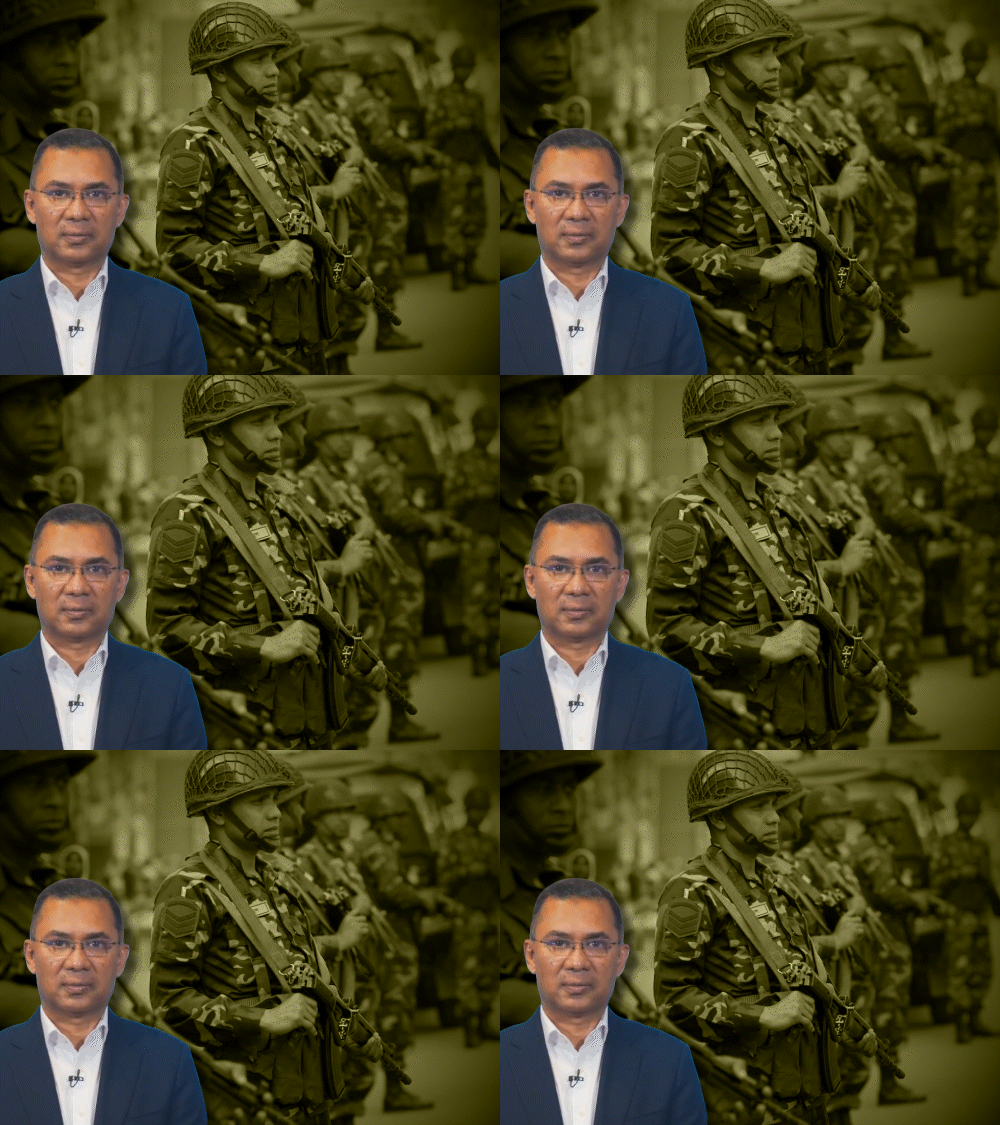
Just days after becoming Prime Minister of Bangladesh, Tarique Rahman has carried out a major reshuffle within the army. Orders issued on Sunday included new appointments to operational and intelligence positions. Brigadier General Md Hafizur Rahman, the Defence Advisor stationed in India, has been promoted to Major General. He has been recalled and appointed General Officer Commanding (GOC) of the 55th Infantry Division. Lieutenant General Muhammad Mainur Rahman has been appointed Chief of General Staff (CGS) of the army. He previously headed the Army Training and Doctrine Command. He replaces Lieutenant General Mizanur Rahman Shamim, who was placed on retirement leave. Changes in Armed Forces Divisions and Field Commands: Major General Qaiser Rashid Chowdhury has been appointed Director of the Directorate General of Forces Intelligence (DGFI). He previously served as Brigadier General at Army Headquarters. He replaces Major General Mohammad Jahangir Alam, who is currently assigned as Ambassador to the Ministry of Foreign Affairs. Lieutenant General Mir Mushfiqur Rahman has been appointed Principal Staff Officer (PSO) of the Armed Forces Division. He was previously the General Officer Commanding (GOC) of the 24th Infantry Division in Chittagong. The current PSO, Lieutenant General SM Kamrul Hasan, has been transferred to the position of Ambassador to the Ministry of Foreign Affairs. Major General JM Emdadul Islam has been appointed Commandant of the East Bengal Regimental Centre. Major General Firdos Hasan Salim has been appointed GOC of the 24th Infantry Division. Why did the reshuffle in the Bangladesh Army take place? This major reshuffle is seen as the first major step by Tariq Rahman’s new BNP government to consolidate its control over the military. Following the fall of Sheikh Hasina’s government due to the student protests in February 2024, Muhammad Yunus’s interim government appointed officers close to him or associated with the old establishment to several top positions in the army. Now, after the BNP’s landslide victory in the February 12, 2026, elections, and Tariq Rahman became Prime Minister on February 17, the new government quickly made changes to these positions. The main reason behind this is believed to be removing old officers (those associated with the Yunus government or the Hasina era) and giving key command and intelligence positions to officers close to the BNP or loyal to the new government, so that the army can strengthen itself and prevent any counterbalance to the new government. What benefits does this reshuffle bring? Overall, this reshuffle is part of the new government’s “power consolidation,” that is, consolidating power and eliminating the risks associated with the old system. Experts believe this will provide greater stability to Tariq Rahman’s government in the coming months. Tariq Rahman accused of election rigging. Amidst the military reshuffle, opposition parties in Bangladesh have accused Prime Minister Tariq Rahman of election rigging. They claim that Tariq Rahman engineered the election results. The opposition alleges that the elections were ‘engineered’ or manipulated, which is why the BNP won more than 200 seats. After nearly 20 years in Bangladesh, the Bangladesh Nationalist Party (BNP) won a landslide victory in the general elections. The Jamaat-e-Islami-led 11-party alliance and its ally, the National Citizen Party (NCP), have alleged that there was widespread rigging in many seats. ——————————- Read this news too… Pakistani Defense Minister says Munir is not my boss: The army no longer runs the government, there was interference in history, now the system is different Pakistan’s Defense Minister Khawaja Asif has said that Field Marshal Asim Munir is not his boss. He clarified that his boss is Prime Minister Shahbaz Sharif. Read the full news…