
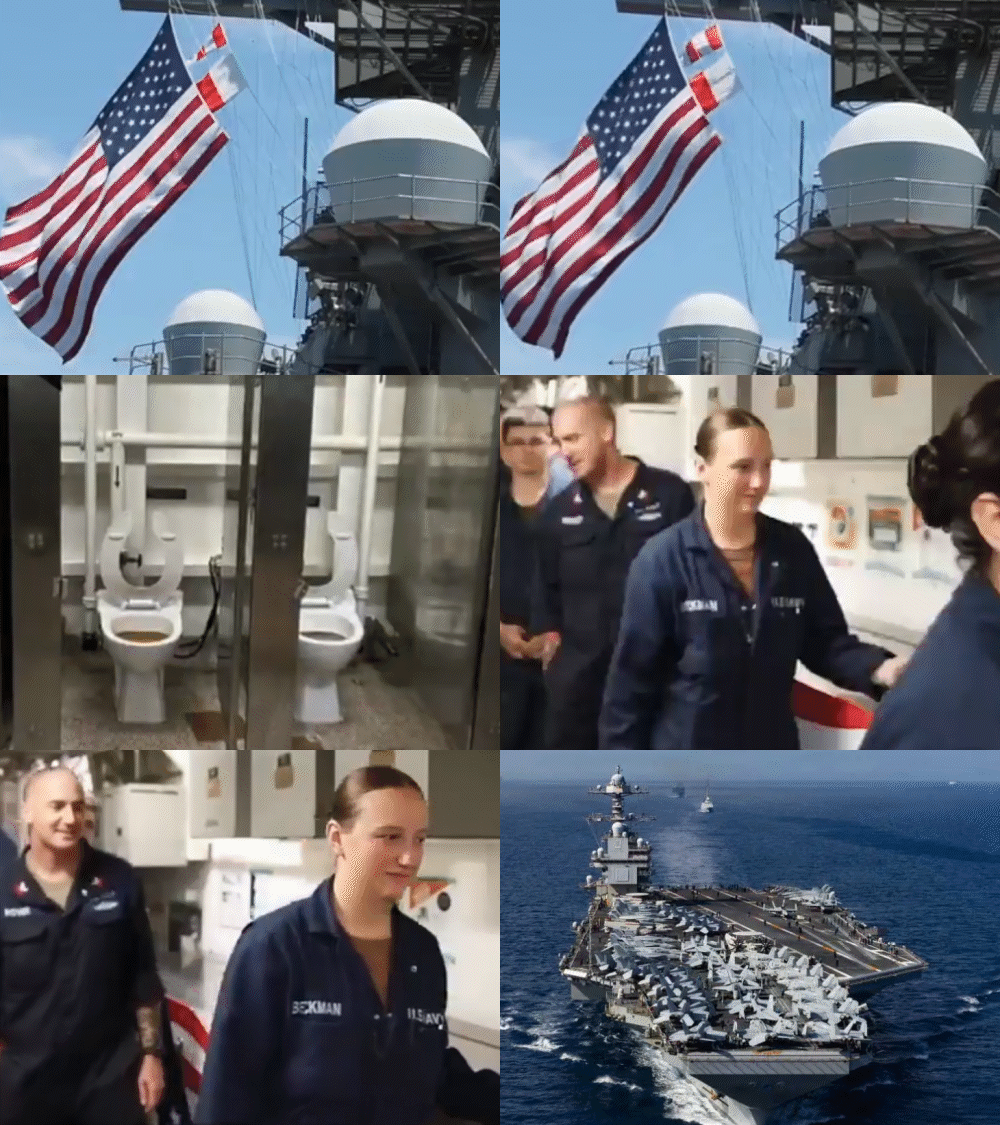
The USS Gerald Ford, a US nuclear aircraft carrier headed for Iran, is facing a unique crisis. Most of the ship’s restrooms are clogged, forcing over 4,500 sailors to queue for up to 45 minutes daily. Narrow pipelines and a design flaw in the vacuum-based system are causing frequent clogs. The ship operates on a vacuum-based sewage system, where a single valve failure can shut down the entire department’s restroom system. According to media reports, clashes have been reported between technicians and soldiers, as repair engineers are working approximately 19 hours a day. Last March, complaints surfaced of 205 toilet failures in four days. The USS Gerald Ford has over 600 restrooms, divided into 10 different zones. The aircraft carrier has been at sea for the past eight months, and constant operational movements have prevented routine maintenance. Built at a cost of approximately $13 billion, this warship is considered the world’s most expensive. This aircraft carrier was commissioned in 2017. Is the vacuum-based system causing the problem? The technology being cited behind the sewage problem is called a vacuum-based VCHT system. It works in a completely different way than the toilet systems used in ordinary homes. VCHT stands for Vacuum Collection, Holding, and Transfer System. It is a specialized sewage management system installed on large ships and cruise ships. Its purpose is to collect toilet waste using less water, store it safely, and transfer it. How does it work? When you flush a toilet at home, the water pressure and gravity push the waste down into the sewer. However, such a system is not fully effective on ocean-going ships. In a VCHT system, pressing the flush creates a vacuum (suction) in the pipes. This suction draws the waste and transports it through the pipes to a large tank. Later, that waste is processed or disposed of. Think of it like a vacuum cleaner sucking up dust. The same technology applies to toilet systems. Why is this system necessary on ships? Aircraft carriers often have over a thousand people at sea for months. Therefore, water is limited and space is limited. Furthermore, pipelines run in multiple directions, not straight lines. Therefore, a flexible and water-efficient system is installed. The VCHT system flushes with less water, saving water. Gerald R. Ford has been deployed at sea since June of last year. Typically, an aircraft carrier’s deployment lasts nine months, but this period is extended as military activity increases. The Ford is powered by a nuclear reactor and can accommodate over 75 military aircraft. These include F-18 Super Hornet fighter jets and E-2 Hawkeye early warning aircraft. It also houses a state-of-the-art radar system that helps control air traffic and navigation. Tensions between the US and Iran are constantly rising. Tensions between the US and Iran are constantly rising. The US has deployed its largest air force in the Middle East since the 2003 Iraq War. According to reports, the US has deployed several squadrons of advanced fighter jets such as the F-35, F-22, F-15, and F-16 to the Middle East. Command and control aircraft, essential for large-scale air operations, are also being deployed. Air defense systems have also been installed in the region in recent weeks. According to a report by the US news agency Axios, if the US takes military action, it will be a major operation lasting several weeks. The report states that this operation will be much larger than the limited action in Venezuela last month and will likely be carried out in collaboration with Israel. Its targets could be Iran’s nuclear and missile infrastructure. The USS Abraham Lincoln is already deployed in the Arabian Sea. Several Iranian cities are within its strike range. The USS Abraham Lincoln was previously deployed in the South China Sea. On January 18th, it crossed the Strait of Malacca and entered the Indian Ocean. In addition, the US has deployed the USS Theodore Roosevelt and several missile destroyers. The US is now positioned to attack Iran’s nuclear facilities, military bases, and command centers from both sea and air.