

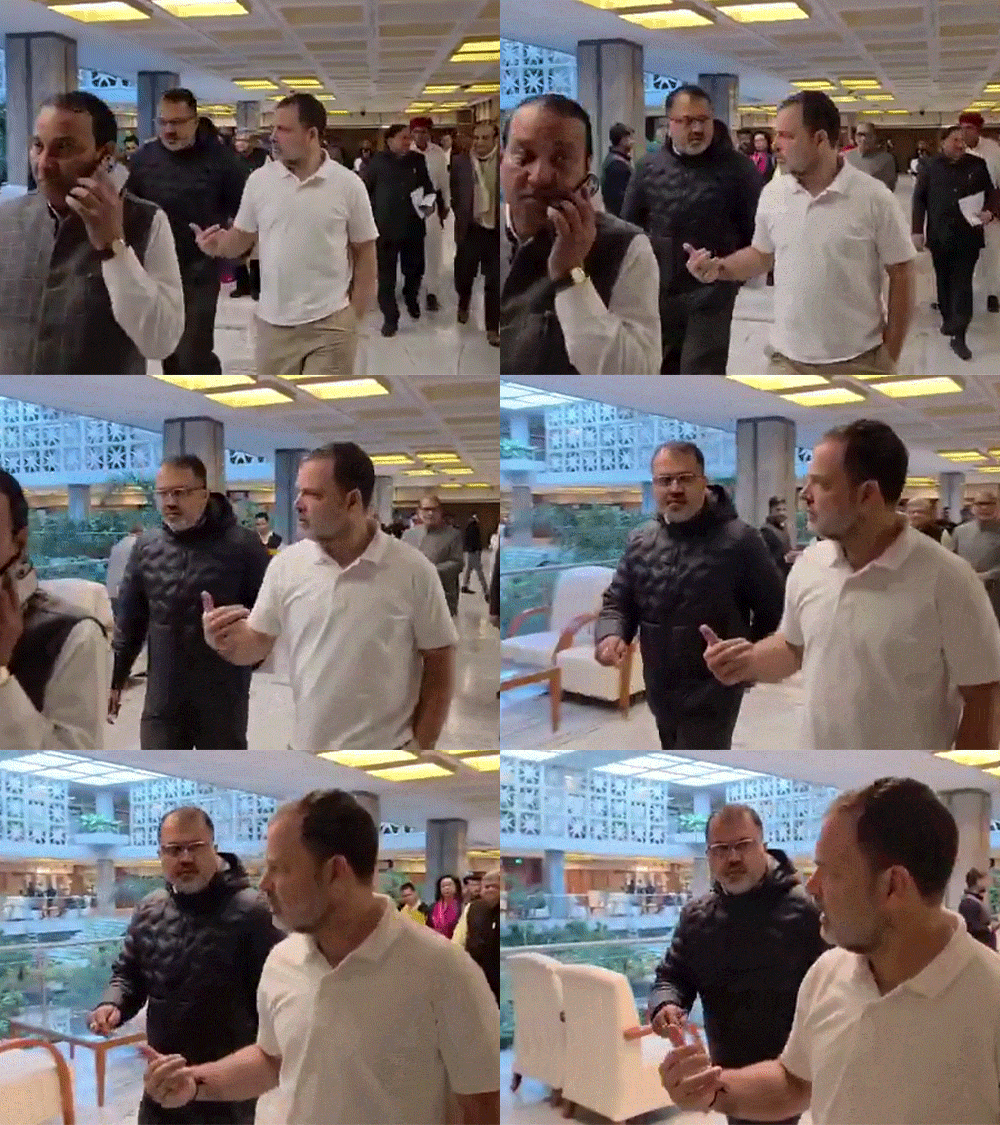
Lok Sabha Leader of the Opposition Rahul Gandhi has written a letter to Union Finance Minister Nirmala Sitharaman, seeking her intervention on two important issues concerning armed forces veterans. In the letter, dated February 25, 2026, Rahul Gandhi demanded adequate funding for the Ex-Servicemen Contributory Health Scheme (ECHS) and the withdrawal of the new income tax provision imposed on disability pensions. Rahul wrote that the Ex-Servicemen Contributory Health Scheme, aimed at providing better healthcare to veterans, is facing a serious financial crisis. He stated that those who have served the country feel neglected today. A copy of this letter has also been sent to Defense Minister Rajnath Singh. Rahul Gandhi is a member of the Parliamentary Standing Committee on Defense and has been consistently demanding increased government facilities for ex-servicemen. Rahul raised issues in the letter… New Income Tax rules on disability pension to come into effect from April 1, 2026 The Central Government has made changes in the provisions related to disability pension of ex-servicemen under the new Income Tax rules that will come into effect from April 1, 2026. According to the new rules, now only the disability pension of those soldiers who have been invalided out of service due to disability will be tax-free. What is the new provision? Under the rules that will come into effect from April 1, 2026, only those disability pensions will be tax-free for those soldiers who have been prematurely discharged from service due to injury or disability. The Impairment Relief (formerly known as disability pension) of those soldiers who remained in service despite injury or disability and retired after completing their prescribed retirement age (superannuation) will now be subject to income tax. What was the earlier rule? Until now, under a system in place since 1922, all service-related disability pensions were considered completely tax-free, whether the soldier was discharged from service or retired on regular superannuation. This decision has been opposed by veterans’ organizations and various political parties. They say this move will impact the morale of soldiers, especially those who continued to serve and completed their full term despite injury or disability. Protesters argue that disability pensions are given as a relief and should not be considered income. Therefore, taxing them is wrong and breaks a decades-old tradition. February 18: Congress had demanded that the government withdraw its decision. On February 18, Congress had said that if the government did not withdraw its decision to exclude disability pensions for soldiers from income tax exemption by February 28, it would join forces with veterans to stage a massive protest. Retired Colonel Rohit Chaudhary, president of the party’s veterans’ department, said that Rahul Gandhi was raising this issue in the Parliamentary Standing Committee. December 29, 2025: Rahul Gandhi said, “Soldiers don’t get treatment.” Rahul Gandhi raised issues related to retired soldiers in the Parliamentary Standing Committee on Defense. In the meeting held in Parliament, Rahul stated that when retired soldiers are referred to private hospitals, they don’t receive treatment there. Rahul stated in the meeting that there is a lack of recruitment and rehabilitation of veterans. A large number of retired soldiers are not receiving employment and guaranteed benefits. In fact, Rahul Gandhi is a member of the Parliamentary Standing Committee on Defense. Now, read this information related to the Parliamentary Committees regarding the questions raised by Rahul in the meeting… How many Departmental Parliamentary Standing Committees does the government have in total?
There are a total of 24 Departmental Parliamentary Standing Committees associated with all the ministries/departments of the Government of India. These committees are of two types: Standing Committees and Ad Hoc Committees. Ad Hoc Committees are formed for specific tasks. Once that task is completed, the committees are dissolved. Are there separate committees in the Lok Sabha and Rajya Sabha? A total of 24 Parliamentary Standing Committees are divided into two parts. 16 committees fall under the Lok Sabha, while 8 committees operate under the Rajya Sabha. How many members are there in these committees?
Each committee has 31 members, of which 21 are elected from the Lok Sabha and 10 from the Rajya Sabha. The tenure of all these committees does not exceed one year. Who selects the members for the committees?
Members of the Standing Committee, also known as a panel of MPs, are nominated by the Speaker of the House. They work under the Speaker’s direction. What is the tenure of the committee?
There are a total of 50 parliamentary committees in Parliament. These include 3 financial committees, 24 departmental committees, 10 standing committees, and 3 ad hoc committees, which have a one-year term. Four ad hoc committees and one standing committee have a five-year term. The tenure of the five other standing committees is not fixed. What is the function of a Parliamentary Committee?
Each department has a separate committee. The primary function of these committees is to investigate irregularities in related matters, make new suggestions, and draft new rules and regulations. Where did the Parliamentary Committee derive these powers?
MPs (committee members) on the Parliamentary Standing Committee have two rights under the Constitution. Article 105 grants MPs the exclusive right to intervene in the proceedings, allowing them to offer their opinions and suggestions to the committee. Article 118 grants them the right to make rules and regulations governing the functioning of Parliament. ……………………… Read this news too… Delhi High Court’s ruling in favor of soldiers: Said – Disability pension cannot be withheld on the grounds of lifestyle disorder, military service is stressful under all circumstances. The Delhi High Court, in its important ruling on February 27th, held that the disability pension of armed forces personnel cannot be withheld simply on the grounds that the illness is a “lifestyle disorder” or occurred during deployment in a peace area. The High Court said that military service, even in non-operational areas, is stressful and can lead to serious illnesses. Read the full story…